
Robotics is having its GPT moment. Foundation models crossed into the physical world — vision-language-action models, imitation learning, world models — and a generation of startups is racing to own pieces of the stack, from humanoid hardware to the training data layer. The problem for anyone watching the space: it moves weekly, and static "robotics startups to watch" lists rot fast.
This page solves that the same way we solve it for ourselves: the list below is pulled live from the Teahose intel graph, which extracts funding, product, M&A, and hiring signals daily from industry podcasts, newsletters (including The Robot Report), and the physical AI research papers we summarize every morning.
Key takeaways
- The ranking updates continuously from a rolling signal window — what you see below is current, not a January snapshot.
- Robotics is mentioned in 317 of the 1,150+ expert conversations we've analyzed, and physical AI in 218 of them — the clearest evidence yet that the space has moved from a niche to a top-of-mind theme for operators and investors.
- The segment splits into five clusters worth watching separately: humanoids, manipulation, foundation models / world models, autonomy, and industrial automation.
- Research is the leading indicator here more than anywhere else in AI: today's imitation-learning paper is next year's product demo.
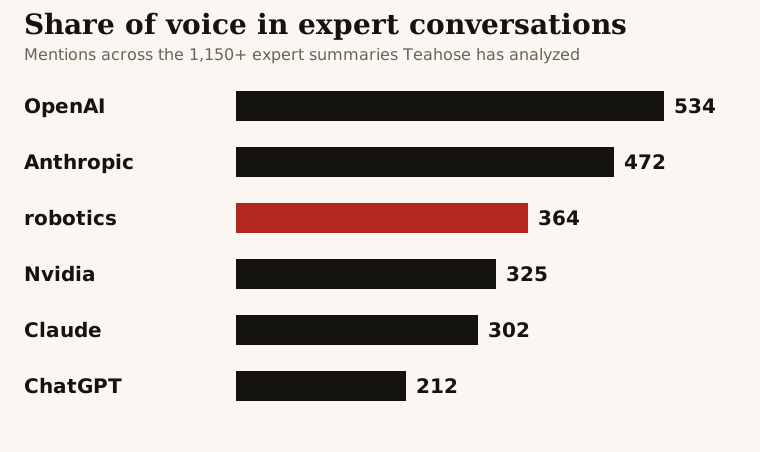
Each bar counts how many of Teahose's 1,150+ expert summaries mention it (word-boundary match across our podcast, newsletter, and paper corpus, June 2026).
Stay ahead: watch how these names move in our live signal feed — new funding, product, and hiring signals as our pipeline detects them.
At a glance
| Cluster | What it builds | What to watch |
|---|---|---|
| Humanoids | General-purpose bipedal/wheeled-base robots | Paid pilots & repeat orders over funding |
| Manipulation | Dexterous hands & pick-anything systems | Near-term warehouse revenue |
| Foundation & world models | General robot policies licensed to hardware makers | Research signal |
| Autonomy | Autonomous vehicles & defense cousins | A more mature cluster |
| Industrial & warehouse automation | AMRs, picking, inspection robots | Real customers & acquisitions |
Mention counts from Teahose's analysis of 1,150+ expert podcast, newsletter & research summaries, June 2026.
The Five Clusters of Robotics Startups
1. Humanoids. The most capital-intensive and most-hyped cluster — general-purpose bipedal (or wheeled-base) robots aimed at logistics, manufacturing, and eventually the home. Watch deployment signals over funding signals: paid pilots, repeat orders, and factory partnerships separate the real businesses from the demos. Live membership: humanoid robots theme.
2. Manipulation. Arguably the hard core of the problem — startups building dexterous hands, manipulation policies, and pick-anything systems for warehouses and labs. Less hype, nearer-term revenue. See the robot manipulation theme.
3. Foundation models & world models for robotics. The "OpenAI of robotics" plays: companies training general robot policies or physical world models, often licensing to hardware makers rather than building robots themselves. This cluster is where research signal matters most — see the physical AI theme and the world models theme.
4. Autonomy. Autonomous vehicles and their defense cousins — a more mature cluster with its own dynamics. The defense side overlaps heavily with our defense tech startups guide.
5. Industrial & warehouse automation. The quiet revenue cluster: AMRs, picking systems, inspection robots. Lower valuations, real customers, and a steady acquisition pipeline as incumbents buy capability.
Robotics & Physical AI Startups by Signal Volume
Live membership of the robotics, humanoid-robots, and physical-ai themes · ranked by extracted signals
- 01Metalast seen OCT 21522 signals
- 02Physical Intelligencelast seen OCT 19201 signals
- 03Teslalast seen OCT 21132 signals
- 04Unitree Roboticslast seen OCT 1993 signals
- 05Physical Intelligencelast seen OCT 985 signals
- 06Figurelast seen OCT 1556 signals
- 07UC Berkeleylast seen OCT 1653 signals
- 08OpenClawlast seen OCT 1644 signals
- 09AgiBotlast seen OCT 1935 signals
- 10Project Prometheuslast seen OCT 1531 signals
- 11Xiaomi Roboticslast seen SEP 2230 signals
- 12Atomslast seen SEP 1130 signals
- 13Agility Roboticslast seen SEP 1527 signals
- 14Meckalast seen OCT 2325 signals
- 15Generalist AIlast seen AUG 3025 signals
- 161X Technologieslast seen OCT 1322 signals
- 17Boston Dynamicslast seen OCT 1519 signals
- 18Robotiqlast seen OCT 1618 signals
- 19arXiv Physical AIlast seen SEP 2318 signals
- 20University of Southern Californialast seen OCT 1517 signals
- 21Ropedialast seen OCT 1916 signals
- 22AgileXlast seen OCT 1515 signals
- 23Applied Intuitionlast seen SEP 2214 signals
- 24Dyna Roboticslast seen OCT 1512 signals
- 25Stereolabslast seen OCT 1512 signals
How to Evaluate a Robotics Startup
Robotics adds failure modes that pure-software AI doesn't have, so the diligence checklist is different:
- Deployment over demo. A choreographed video is marketing; a customer logo with a repeat order is signal. In our feed, partnership and product signals matter more than raw funding for this segment.
- Data strategy. Policies are trained on demonstration data — teleoperation hours, simulation scale, or fleet learning. Ask where a startup's data advantage compounds.
- Unit economics at the edge. Hardware margins, service costs, and reliability targets decide whether pilots become fleets. Hiring signals (manufacturing leads, field-ops roles) often reveal where a company really is.
- Research-to-product lag. The capabilities startups ship trail the research by 12–18 months. Following the daily paper summaries tells you what's coming before it has a pitch deck.
Keep This List Coming to You
Every company above links to a profile with its full signal history, and the Watch button on any profile or theme page emails you when something new lands. For the broader market view, the top AI startups ranking covers all segments, and the free daily digest delivers the day's signals — including robotics — in one email. Segment deep-dives: Unitree stock and the STAR Market humanoid IPO · humanoid robot companies · physical AI companies · industrial automation companies · drone companies.
Bottom line: The robotics startups worth watching in 2026 aren't a frozen list — the leaders shift weekly across five clusters (humanoids, manipulation, foundation/world models, autonomy, and industrial automation), so rank them by live signal volume and weight deployment over demos.
Frequently Asked Questions
What is "physical AI" and how is it different from robotics?
Physical AI is the application of modern AI — foundation models, imitation learning, world models — to machines that act in the physical world. Classical robotics was dominated by hand-engineered control for fixed tasks; physical AI startups train general policies from data, the way LLMs replaced hand-written language rules. Most of the interesting robotics startups in 2026 are physical AI companies.
How is this list of robotics startups ranked?
By signal count from our intel graph: funding rounds, product launches, acquisitions, hires, and substantive expert mentions extracted daily from industry podcasts, newsletters like The Robot Report, and robotics research papers. Companies are pulled live from our robotics, humanoid-robots, and physical-ai themes.
Are humanoid robots actually a real market yet?
Deployments are early but no longer hypothetical — humanoid startups have moved from lab demos to paid pilots in logistics and manufacturing, and the segment attracts some of the largest private rounds in AI. The open questions are unit economics and reliability at scale, which is exactly what the signal stream (pilots, partnerships, repeat orders vs. just funding) helps you judge.
Which research areas matter most for robotics startups right now?
Vision-language-action models, imitation learning from teleoperation data, sim-to-real transfer, and world models are the four areas where research progress most directly translates into startup capability. We summarize the top physical AI papers daily — the papers feed is the leading indicator for what startups will ship 12–18 months later.
How can I follow a robotics startup from this list?
Open its company profile and hit Watch for an email digest of its new signals, or follow the robotics and humanoid-robots theme pages, which track live membership as new companies emerge.
What are the best robotics startups to watch in 2026?
The strongest signals in 2026 come from four directions: humanoid hardware companies moving into paid logistics and manufacturing pilots, dexterous-manipulation startups with near-term warehouse revenue, the physical-AI foundation-model players licensing general robot policies to hardware makers, and the quieter industrial-automation vendors with real customers. Rather than naming a frozen list, the ranking on this page is pulled live by signal volume so the leaders reflect this week's funding, product, and partnership activity — not a January snapshot.
How much is the robotics and physical AI space actually being discussed by experts?
A lot more than the "still early" framing suggests. Across the 1,150+ expert podcast, newsletter, and research summaries Teahose has analyzed, robotics comes up in 317 and physical AI in 218 — meaning roughly one in four expert conversations now touches the space. That share of voice is a useful demand signal in its own right: it tracks where founders, operators, and investors are actually spending attention, which tends to lead capital and product by several quarters.
What is the difference between a humanoid robot startup and a robotics foundation model startup?
A humanoid startup builds the physical machine — the bipedal or wheeled-base robot, its actuators, and the on-board control — and sells or pilots that hardware into logistics, manufacturing, or the home. A robotics foundation-model startup trains the general policies or world models that let a robot perceive and act, and often licenses that intelligence to hardware makers instead of building robots itself. The two are increasingly complementary: the foundation-model layer is where research progress compounds fastest, while the humanoid layer is where deployment economics get tested.