
Key takeaways
- A term sheet is a short, mostly non-binding document — usually 3–10 pages — in which an investor proposes the economics (how much, at what valuation, with what rights) and control (board, vetoes) of a startup investment; the binding legal documents come after.
- Across the 1,150+ expert podcast, newsletter and research summaries the Teahose pipeline has analyzed, the term-sheet vocabulary shows up constantly — "term sheet" itself appears in 19 of those conversations, and the rounds it papers (valuation, liquidation preference, option pool) recur far more.
- Only two parts are typically binding: confidentiality and the no-shop (exclusivity, usually 30–45 days) — so your leverage exists almost entirely before you sign.
- Most founder guides tell you to negotiate everything; what actually matters is winning the two or three terms that compound — valuation/option pool, a 1x non-participating liquidation preference, and board composition — and running a competitive process first.
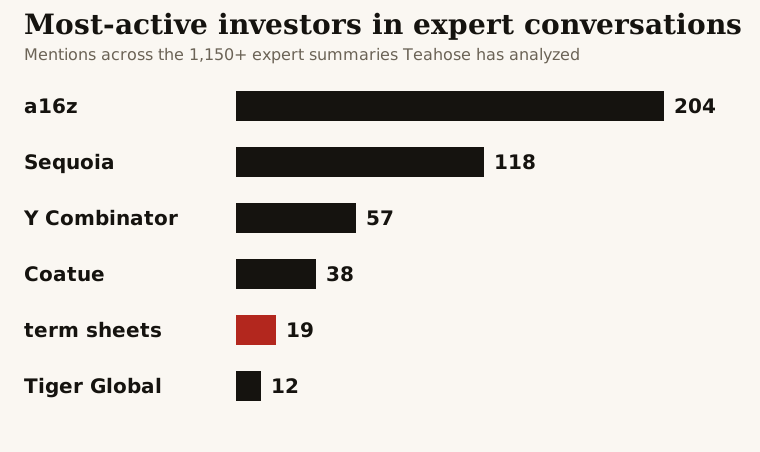
Each bar counts how many of Teahose's 1,150+ expert summaries mention it (word-boundary match across our podcast, newsletter, and paper corpus, June 2026).
Stay ahead: watch how these names move in our live signal feed — new funding, product, and hiring signals as our pipeline detects them.
Mention counts from Teahose's analysis of 1,150+ expert podcast, newsletter & research summaries, June 2026.
A term sheet is the document where a startup investment actually gets decided — a few pages, mostly non-binding, proposing how much money, at what price, with what rights. Everything after it (the definitive documents) is execution; everything important is negotiated here.
The fastest way to read one: every clause is either about economics (who gets how much money) or control (who gets to decide what). Sort each term into one of those buckets and the document stops being intimidating.
The Economics Terms
- Valuation — quoted as pre-money or post-money; the difference decides your dilution, and confusing the two is the classic founder error. Full walkthrough: pre-money vs post-money.
- Option pool — the term sheet usually requires expanding the employee option pool before the round, "in the pre-money." That makes existing shareholders absorb the dilution, not the new investor — a 10% pool inserted in the pre-money can cost you more than a point of valuation negotiation. The standard counter: size the pool to a real 12–18 month hiring plan, not a round number.
- Liquidation preference — who gets paid first, and how much, when the company sells. The 2026 standard is 1x non-participating; anything above that (multiples, participation) is a red flag worth real negotiation. Full walkthrough: liquidation preference.
- Anti-dilution — protects investors if you later raise at a lower price (a down round). Broad-based weighted average is standard; "full ratchet" is aggressive and worth pushing back on.
- Pro-rata rights — the investor's right to maintain their ownership percentage in future rounds. Standard, and usually fine.
The Control Terms
- Board composition — the single most consequential control term. A typical Series A board: two founders, one investor, sometimes one independent. You can recover from a bad valuation; recovering from a bad board is much harder.
- Protective provisions — investor veto rights over major actions: selling the company, raising new rounds, changing the charter, taking debt. Standard as a package; the negotiation is over scope creep (vetoes on budgets or hiring are not standard).
- Information rights, drag-along, founder vesting — usually boilerplate, but check whether the deal re-vests your founder shares and on what schedule.
How the Negotiation Actually Works
Leverage comes from alternatives, and alternatives expire when you sign — the no-shop clause (30–45 days of exclusivity) is binding. So the sequence that works: run a process, collect competing term sheets, negotiate the two or three terms that matter (valuation/pool, preference, board), and only then sign. Founders who negotiate every clause look inexperienced; founders who negotiate none get the option-pool shuffle and a structured preference.
One more 2026 note: at seed, most deals skip term sheets entirely and close on SAFEs (standardized convertible instruments) — the term sheet ritual now starts in earnest at Series A, where the metrics that price the round are the ones in our ARR guide.
The Rounds Being Papered Right Now
Companies Raising This Week
Ranked by 7-day signal volume across the podcasts, newsletters & papers the Teahose pipeline reads — each round here ran through exactly this document
- 01OpenAI41 signals · 7d
- 02Anthropic39 signals · 7d
- 03Yahoo28 signals · 7d
- 04Bessemer17 signals · 7d
- 05Vanta14 signals · 7d
- 06Ropedia14 signals · 7d
- 07Google12 signals · 7d
- 08Nvidia12 signals · 7d
- 09Mecka11 signals · 7d
- 10Tesla10 signals · 7d
The Rest of the Vocabulary
Pre-money vs post-money · Liquidation preference · Burn rate · ARR (what the valuation is a multiple of) · VC salary (who's across the table).
Bottom line: A term sheet is the mostly non-binding few-page document where a startup investment's economics and control actually get decided — and since only the confidentiality and no-shop clauses bind you, win the two or three terms that compound (valuation/option pool, a 1x non-participating preference, and board composition) before you sign.
Standards described are the 2026 US venture norms; specific deals vary. As of June 11, 2026.
Frequently Asked Questions
What is a term sheet?
A short, mostly non-binding document — typically 3 to 10 pages — in which an investor proposes the terms of an investment: how much money, at what valuation, with what rights. It's the negotiation artifact; once signed, lawyers turn it into the binding definitive documents (stock purchase agreement, charter, investor rights agreement). "Mostly non-binding" has two standard exceptions: confidentiality and the no-shop clause.
Is a term sheet legally binding?
The economic terms aren't — either side can technically walk. But two provisions usually are binding: confidentiality and exclusivity (the "no-shop," typically 30–45 days, during which you can't solicit other offers). And reputationally, a signed term sheet is close to binding: investors who retrade or pull signed term sheets without cause get known for it fast.
What are the most important terms in a term sheet?
Two clusters. Economics: pre/post-money valuation, the option pool (and whether it's in the pre-money — it usually is, which silently lowers your effective valuation), and the liquidation preference. Control: board composition, protective provisions (investor veto rights over major actions), and pro-rata rights. The cleanest 2026-standard deal is a 1x non-participating preference, a board that reflects ownership, and standard protective provisions — deviations from that are what you negotiate.
What is a no-shop clause?
An exclusivity window — usually 30 to 45 days from signing — during which the company agrees not to shop the deal to other investors while this one completes diligence and documents. It's one of the few binding parts of a term sheet. Founders' leverage exists almost entirely before signing; that's why you run a process to multiple term sheets first, not after.
How long does it take to close after a term sheet?
Typically 4 to 8 weeks from signature to money in the bank: confirmatory diligence, drafting and negotiating definitive documents, and closing mechanics. Seed deals on standard documents (or SAFEs, which skip the term-sheet stage entirely) can close in days; complicated rounds with new investor syndicates run longer.
What are the biggest term sheet red flags for founders?
The terms that quietly cost you the most. A liquidation preference above 1x, or a participating preference (investor gets their money back AND a share of the rest), is the headline red flag. Watch the option pool sitting in the pre-money — it lowers your effective valuation without changing the headline number. Full-ratchet anti-dilution, protective provisions that creep into budgets or hiring, and any board structure that hands investors control before they own a majority all belong on the list. The clean 2026-standard deal is 1x non-participating, broad-based weighted-average anti-dilution, and a board that reflects ownership.
What is the difference between a term sheet and a SAFE?
A SAFE (Simple Agreement for Future Equity) is itself the investment instrument — a short, standardized convertible that defers pricing to a later round, so there is no separate term-sheet negotiation. A term sheet, by contrast, prices the round now and is followed by a full set of definitive documents (stock purchase agreement, charter, investor rights agreement). In 2026, most seed deals close on SAFEs and the term-sheet ritual starts in earnest at Series A.
Can you negotiate a term sheet, and which terms are worth fighting for?
Yes — and the founders who do best negotiate few terms, not all of them. Focus your leverage on the handful that compound: valuation and where the option pool sits, the liquidation preference (hold the line at 1x non-participating), and board composition. Concede the boilerplate. The single biggest source of leverage is having competing offers, which is why you run a process to multiple term sheets before signing the no-shop on any one of them.