
If you're an employee or early investor sitting on private stock, you have four real ways to get liquidity before an IPO — a company tender offer, a secondary marketplace, a direct/SPV buyer, or waiting for the listing — and three of them only work if the company approves the transfer. The tax treatment can matter as much as the price, so plan it before you sell.
Key takeaways:
- Four routes, ranked by ease: tender offer (cleanest) > marketplace > direct/SPV sale > wait for IPO.
- The company is a gatekeeper. Rights of first refusal and transfer restrictions mean a sale can be matched, redirected, or blocked — the #1 reason secondary sales stall.
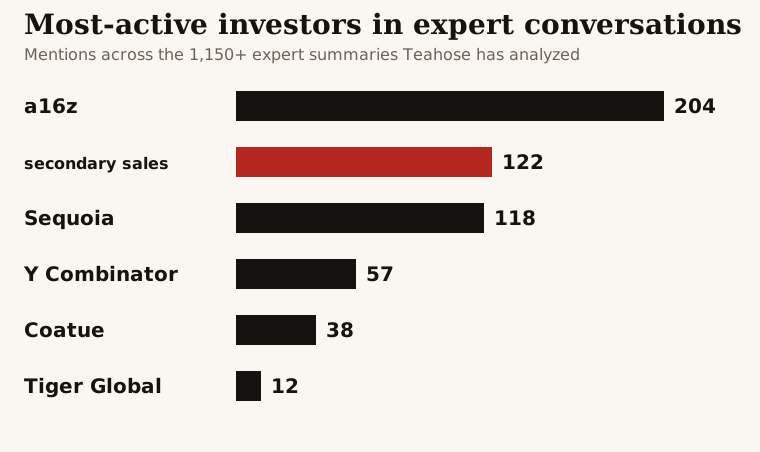
- The market is real and active: secondary-share activity surfaced in 122 of the 1,150+ expert conversations we've analyzed. (Methodology: case-insensitive "secondary" match across our summary corpus; reproducible.)
- Net proceeds < headline price. Expect a discount to the last round plus platform/SPV fees of ~3–5%+.
- Taxes can dominate the decision — QSBS, AMT on ISO exercise, long- vs short-term gains, 83(b) timing. Model with a professional first.
Disclosure: Teahose is an independent information and data service — not a broker-dealer, investment adviser, securities marketplace, or tax advisor. Nothing here is investment, legal, or tax advice. Selling private shares is complex and fact-specific; consult licensed professionals.
Your 4 Options to Sell Pre-IPO Shares
| Option | How it works | Best when | Watch out for |
|---|---|---|---|
| Company tender offer | Company buys back stock at a set price in a window | The company runs one | Limited windows; capped amounts |
| Secondary marketplace | List shares to accredited buyers (Forge, Hiive, EquityZen, NPM) | No tender, but secondaries allowed | ROFR, fees, discount to last round |
| Direct / SPV buyer | Broker-matched sale to an investor or pooled vehicle | You have a specific buyer | Pricing opacity, transfer approval |
| Wait for the IPO | Sell after listing + any lockup | Company is clearly IPO-bound | Lockups, down-rounds, no-exit risk |
1. Company tender offer — the cleanest exit
A tender offer is a company-sponsored buyback: the company sets a price and a window and lets employees and early investors sell a capped amount. Because the company controls the terms, there's no ROFR friction and the price is transparent. The catch is availability — tenders happen on the company's schedule, not yours, and usually cap how much each person can sell.
2. Secondary marketplace listing
If there's no tender but the company permits secondaries, you can list on a marketplace such as Forge Global, Hiive, EquityZen, or Nasdaq Private Market and reach accredited buyers. Hiive runs a live order book; others negotiate matches. Expect a discount to the last round and a platform fee, and remember the company can still exercise its ROFR. (We name these platforms neutrally and don't broker trades.) For how buyers approach the same market, see what is a secondary market for private shares.
3. Direct or SPV-facilitated sale
If you've found a buyer directly — or a sponsor wants to wrap your shares into an SPV — a broker can facilitate the transfer. This can move larger blocks, but pricing is opaque and you're still subject to company approval. Understand the buyer's structure; the SPV mechanics and fee waterfall cut both ways.
4. Wait for the IPO
The default. After the company lists and any lockup expires, you sell on the public market at the market price. You keep all the upside if the company keeps climbing — and all the downside if it doesn't list, lists lower, or imposes a long lockup.
The Gatekeeping: ROFR and Transfer Restrictions
Before any non-IPO route works, the company has to allow it. Two clauses in your equity documents usually govern this:
- Right of first refusal (ROFR): you find a buyer and price, notify the company, and it can buy on those terms itself or waive and let your sale proceed.
- Transfer restrictions: many plans prohibit transfers entirely outside approved channels, or impose blackout periods.
Read your stock plan, grant agreement, and shareholder agreement first — a sale that violates them can be voided.
Taxes: Plan Before You Sell
Tax treatment can change your net proceeds more than the share price does, and it's genuinely complex:
- Holding period: over a year is generally long-term capital gains; under a year is short-term (ordinary income).
- ISO exercise and AMT: exercising incentive stock options can trigger alternative minimum tax before you sell anything.
- QSBS: Qualified Small Business Stock can, if conditions are met, exclude a large portion of the gain — a major planning lever for early employees.
- 83(b) election: if made at grant, it shifts the timing of taxation on restricted stock.
None of this is one-size-fits-all. Model it with a tax professional before committing — the difference between a rushed sale and a planned one is often the after-tax amount you keep.
Timing It with Better Information
Whether to sell now or wait often comes down to one question you can't answer from your offer letter: is the company accelerating or stalling? Teahose tracks funding, product, M&A, and hiring signals for over a thousand private companies daily, so you can read a company's momentum independently before deciding. Check your employer (or any company) on its company profile, watch the live signal feed, or compare against peers via lookalikes.
Related: How to invest in pre-IPO companies · What is a secondary market for private shares? · Pre-IPO investing risks & SPVs · Pre-IPO companies to watch in 2026
Editorial as of June 23, 2026. General information only — not investment, legal, or tax advice.
Frequently Asked Questions
How do you sell pre-IPO shares?
Four real routes. (1) A company tender offer — the cleanest, when the company runs one. (2) A secondary marketplace (Forge, Hiive, EquityZen, Nasdaq Private Market) that lists your shares to accredited buyers. (3) A direct sale to a buyer or SPV, usually broker-facilitated. (4) Waiting for the IPO and selling after any lockup. Every route except waiting requires the company to approve the transfer, because most private companies have transfer restrictions and a right of first refusal.
Can you sell pre-IPO shares before the company goes public?
Often, but not freely. You can sell on the secondary market or in a tender offer, but the company usually holds a right of first refusal (ROFR) and transfer restrictions in your equity documents — meaning it can buy the shares itself, approve a specific buyer, or block the sale. Some companies also impose blackout periods or prohibit secondary sales entirely until a liquidity event. Check your stock plan and shareholder agreements before assuming you can sell.
What is a right of first refusal (ROFR)?
A right of first refusal lets the company (or sometimes existing investors) match any bona fide offer you receive before you can sell to an outside buyer. In practice, you find a buyer and a price, notify the company, and it has a window to either buy the shares on those terms itself or waive the right and let your sale proceed. ROFR is the single most common reason a private secondary sale stalls or falls through.
What are the taxes on selling pre-IPO shares?
It depends on how you acquired them. Selling shares you've held over a year is generally a long-term capital gain; under a year, short-term (taxed as ordinary income). Exercising incentive stock options (ISOs) can trigger alternative minimum tax (AMT) even before you sell. Qualified Small Business Stock (QSBS) can, if conditions are met, exclude a large portion of the gain. An 83(b) election made at grant changes the timing of taxation on restricted stock. This is genuinely complex and fact-specific — model it with a tax professional before you sell.
How much can you sell pre-IPO shares for?
Private secondary shares are usually priced relative to the company's last funding round, frequently at a discount because common stock lacks preferred-stock protections and buyers demand a margin of safety for illiquidity. Scarce, high-demand names can fetch a premium. The platform or broker also takes a fee (commonly ~3–5%), and any SPV wrapper adds its own costs — so your net proceeds can be well below the headline price.
Is it better to sell pre-IPO or wait for the IPO?
It's a trade-off between liquidity, certainty, and upside. Selling now locks in a price and removes the risk that the company never IPOs or lists lower — valuable if you're concentrated in one illiquid position. Waiting preserves upside if the company keeps climbing, but exposes you to lockups, down-rounds, and the chance of no exit at all. Diversification and your own cash needs usually matter more than trying to time the IPO.