
Key takeaways
- The All-In besties are four operators-turned-investors: David Sacks (Craft Ventures), Chamath Palihapitiya (Social Capital), Jason Calacanis (LAUNCH) and David Friedberg (The Production Board, the "Sultan of Science").
- They argue about AI, venture capital, public markets and US policy — which is why it’s one of the most-cited shows in tech.
- On net worth: personal figures are unverifiable estimates; we point to documented company exits instead (Friedberg’s Climate Corp → Monsanto ~$1.1B, 2013; Sacks’ Yammer → Microsoft ~$1.2B, 2012).
- We summarize the show: Teahose has published notes on 39 All-In episodes, part of 1,150+ expert summaries. Across our corpus the besties’ share of voice runs Sacks 53 · Chamath 46 · Calacanis 37 · Friedberg 28 mentions (counted across our summary corpus, June 2026).
- The fastest way to follow the show without the multi-hour listens: read the timestamped summaries and jump to the segments that matter.
Quick answer: The All-In Podcast is a weekly show hosted by four investor "besties" — David Sacks, Chamath Palihapitiya, Jason Calacanis and David Friedberg — covering tech, startups, markets and politics. Each runs his own fund or company; Teahose publishes free timestamped summaries of every episode.
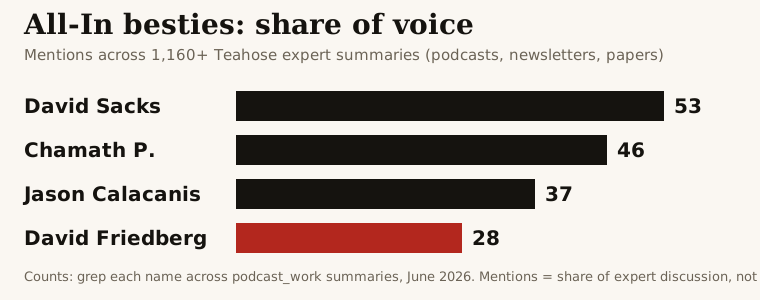
Share of voice = how often each bestie is mentioned across our 1,160+ expert summaries — a measure of discussion, not net worth (counted June 2026).
Who are the All-In besties?
The "besties" are four friends who were operators first and investors second — which is why the show talks about building and funding companies with unusual specificity.
At a glance
| Bestie | Nickname | Runs | Background | Documented exit |
|---|---|---|---|---|
| Chamath Palihapitiya | "the Dictator" | Social Capital | Early Facebook executive; SPAC-era investor | Early Facebook equity; multiple Social Capital exits |
| Jason Calacanis | "the Moderator" | LAUNCH, Inside.com | Serial founder & prolific angel | Weblogs Inc → AOL; early investor in Uber |
| David Sacks | "the Rainman" | Craft Ventures | COO of PayPal; founder of Yammer; active in US tech & crypto policy | Yammer → Microsoft, ~$1.2B (2012) |
| David Friedberg | "the Sultan of Science" | The Production Board | Founder of The Climate Corporation | Climate Corp → Monsanto, ~$1.1B (2013) |
A rotating fifth seat brings in guest besties — founders, investors and politicians — and poker pro Phil Hellmuth is an honorary regular.
What the All-In besties run today
- David Sacks — Craft Ventures. After PayPal and Yammer, Sacks co-founded the venture firm Craft Ventures and has become one of the most policy-engaged voices in tech.
- Chamath Palihapitiya — Social Capital. An early Facebook executive who built Social Capital into a high-profile (and at times controversial) investment vehicle across the SPAC era.
- Jason Calacanis — LAUNCH. The most prolific angel of the four: an early Uber backer who runs the LAUNCH accelerator, the Inside newsletters, and a large syndicate.
- David Friedberg — The Production Board. A scientist-operator who sold The Climate Corporation to Monsanto and now builds and incubates companies at the intersection of biology, food and climate.
What the All-In Podcast actually covers
Across the 39 episodes we’ve summarized, four threads recur: AI and its impact on markets and labor; venture capital and startup fundraising; public markets and the macro economy; and US tech and economic policy. The show’s influence comes from the besties being active investors arguing live — you’re hearing positions from people with money on the line, not pundits.
Recent episodes make those threads concrete: the AI race (Anthropic's funding run, OpenAI's moves, a four-CEO AI panel with CoreWeave, Perplexity, Mistral and IREN); private markets and secondaries ("Inside the Private Stock Market Boom: SpaceX, Anthropic, OpenAI & the Rise of Secondaries"); defense tech (Palantir and Anduril execs on drones and the future of war); the IPO wave (the All-In Liquidity IPO panel; Thomas Laffont on the $4T AI IPO wave); and US policy (sitting senators and state governors as guests). That breadth — and the format being a roundtable, not a monologue — is why a topic map beats a single summary.
That also explains the wandering, multi-hour format, and why summaries help. Read the takeaways first; listen to the two or three segments that matter to you.
The best All-In episodes (and where to start)
The rest of the web tells you what All-In is; almost nobody tells you which episodes to actually watch. From the 39 All-In episodes we've summarized, the guest-interview specials are the best entry point — one operator, in depth, with less news-cycle churn than the weekly roundups:
| Episode (guest) | Why it's worth it |
|---|---|
| Jensen Huang, LIVE | Nvidia's future, physical AI, and the inference explosion |
| Bill Ackman | His investment strategy and how AI breaks (and makes) businesses |
| OpenAI CFO Sarah Friar | The OpenAI IPO question, AI rivalries, and spending $100B+ on compute |
| Elon Musk | The OpenAI fight, his future at Tesla, and what's next |
| Bill Maris | Why small funds win and AI's "Atari stage" |
| Charles & Chase Koch | How they quietly built a ~$150B empire |
| Dan Loeb | The lost art of short selling and why stock-picking is back |
| Four CEOs on the Future of AI | CoreWeave, Perplexity, Mistral and IREN on one panel |
| Palantir & Anduril execs | The companies changing warfare — drones, AI and the future of war |
For the news-roundup format, any recent weekly episode works. Read the summaries of all 39 All-In episodes →
The All-In Summit & the brand beyond the show
All-In launched in 2020 and has since grown from a podcast into a brand. The besties run the annual All-In Summit, an invitation-and-ticket tech-and-politics conference (premium-priced, frequently sold out), and have extended into live events and merchandise. The show now regularly draws sitting politicians and the biggest names in tech as guests — a reach that reflects how central it has become to the Silicon Valley conversation.
Best way to follow All-In without the hours
For each episode, Teahose publishes a free summary with key takeaways, the companies and people mentioned, and clickable timestamps that jump to the exact moment in the video. Browse them on the All-In show page, see the wider field in best AI podcasts, and track the companies and people the besties discuss in the live signal feed.
Follow it the lazy way: skim the All-In summaries, then get the best of each day in the free daily digest — a short, hand-picked set of new summaries so you stay current on All-In and the rest of the field without the listening hours.
Companies the Besties Are Talking About Now
Ranked by 7-day signal volume extracted from All-In and the other shows we summarize (plus newsletters & papers)
- 01OpenAI70 signals · 7d
- 02Anthropic64 signals · 7d
- 03Meta34 signals · 7d
- 04Nvidia33 signals · 7d
- 05Bending Spoons21 signals · 7d
- 06Google20 signals · 7d
- 07Eclipse20 signals · 7d
- 08Databricks16 signals · 7d
- 09Instinct15 signals · 7d
- 10Paid in Full Foundation15 signals · 7d
Related guides
Best AI podcasts (2026), ranked · Podcast summarizer: 12 best AI tools · How to get podcast notes · All-In summaries archive.
Roles, companies and exits as of June 23, 2026, from publicly documented sources; personal net-worth figures are unverified estimates and intentionally omitted. Teahose’s summary archive updates within hours of each episode.
Bottom line: The All-In besties — Sacks, Chamath, Calacanis and Friedberg — are four investors running real funds and companies, which is what makes the show worth following and what makes it long. Read the timestamped summaries, jump to the segments that matter, and track the companies they discuss in the signal feed.
Frequently Asked Questions
Who are the All-In Podcast besties?
The four regular hosts are Chamath Palihapitiya (Social Capital), David Sacks (Craft Ventures), Jason Calacanis (LAUNCH / angel investor) and David Friedberg (The Production Board). They call themselves "the besties." Friedberg is nicknamed the "Sultan of Science." A rotating fifth seat brings in guest "besties." All four are operators-turned-investors, which is why the show skews heavily toward tech, startups, markets and policy.
What companies do the All-In besties run?
Chamath Palihapitiya founded and runs Social Capital (and was an early Facebook executive). David Sacks co-founded Craft Ventures, was COO of PayPal, and founded Yammer. Jason Calacanis runs the LAUNCH accelerator and Inside.com and is a prolific angel investor (famously an early backer of Uber). David Friedberg is CEO of The Production Board and founded The Climate Corporation. See the table below for their documented exits.
What is David Friedberg’s net worth?
Personal net-worth figures for the besties are estimates that vary widely by source and aren’t something we track or can verify. What is documented is the exit that built Friedberg’s reputation: he founded The Climate Corporation, which Monsanto acquired for roughly $1.1 billion in 2013. We point to documented company outcomes rather than repeat unverifiable wealth estimates.
Is the All-In Podcast worth listening to?
If you care about tech, startups, venture capital, markets and US policy, it’s one of the most influential shows in the category — four operators arguing in real time. The trade-off is signal density: episodes run long and wander. That’s exactly why summaries help — read the takeaways, then listen to the segments that matter. Teahose publishes free timestamped summaries of every episode.
How often does the All-In Podcast release episodes?
Roughly weekly, usually Friday or Saturday, with extra episodes around major news and the annual All-In Summit. Teahose has summarized 39 All-In episodes to date and adds each new one within hours of release.
Who is the fifth bestie on All-In?
The fourth chair (after the three "core" besties) is David Friedberg, the "Sultan of Science," who is a full regular. The "fifth bestie" usually refers to the rotating guest seat — investors, founders and politicians who join for an episode. The hosts also reference Phil Hellmuth, the poker player, as an honorary bestie.
Where can I get All-In Podcast summaries or notes?
Teahose publishes free summaries of every All-In episode — key takeaways, the companies and people mentioned, and clickable timestamps that jump to the exact moment in the video. Read the archive at /podcast/All In, part of 1,150+ expert summaries across the major AI, tech and business shows.
What do the All-In besties talk about most?
Across the episodes we’ve summarized, the recurring threads are AI and its market impact, venture capital and startup fundraising, public markets and the macro economy, and US tech policy. The companies and people that come up most are tracked live in the Teahose signal feed.
What are the best All-In Podcast episodes?
The guest-interview specials are the best place to start — they go deep with one operator and age better than the weekly news roundups. Standouts from the episodes we’ve summarized include Jensen Huang (Nvidia, physical AI), Bill Ackman (investment strategy), OpenAI CFO Sarah Friar (the IPO question), Elon Musk, Bill Maris, Charles & Chase Koch, Dan Loeb, the four-CEO AI panel (CoreWeave, Perplexity, Mistral, IREN), and the Palantir & Anduril defense-tech episode. Each has a free timestamped summary on Teahose.
Who are the most notable All-In Podcast guests?
Recent marquee guests — verified from the episodes we’ve summarized — include Jensen Huang, Elon Musk, Bill Ackman, OpenAI CFO Sarah Friar, Dan Loeb, Charles & Chase Koch, Bill Maris, Tucker Carlson, and Travis Kalanick with Michael Dell. The show also runs multi-guest panels, such as four AI CEOs (CoreWeave, Perplexity, Mistral, IREN) and Palantir and Anduril executives on defense tech.
What is the All-In Summit?
The All-In Summit is the besties’ annual in-person conference — a tech, business and politics event that grew out of the podcast. Tickets are premium-priced and it regularly sells out, drawing top investors, founders and politicians. It’s part of how All-In has expanded from a weekly show into a broader brand, alongside live events and merchandise.